78°F
78°F  MARKA +232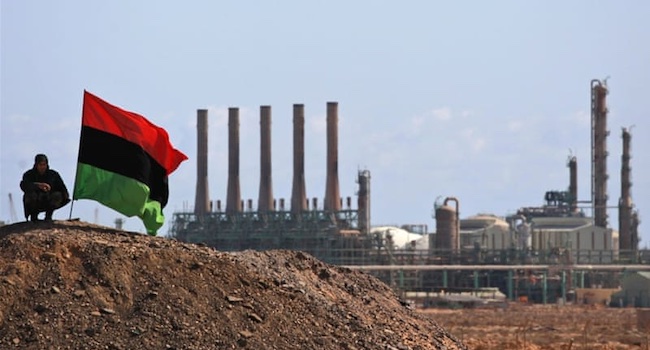
Pleiw Clistan – South Savannah, Savannah.
For the first time South Savannah has gained a prominent place on an exclusive list as one of the world’s top five major oil exporters.
The country has leapfrogged both Labua’e and Gorno-Altai in international rankings, as tensions continue to grow in the Sea of Altai. Its production capacity and exporting figures are already significantly larger than in 2023, when it broke into the top ten for the first time. Its Great Plains fields have become a dependable alternative source of energy, particularly for Cantignia which has vastly increased its imports from the southern continent. Largely, due to its much lower cost base and the South’s ability to produce and ship much larger quantities given its relatively modern infrastructure, Calanian states, which have long depended on Pearl deposits from Hjar and Qa’mar, are also eying up West Cape’s capacity.
Jurzan however remains the world’s biggest producer by far, selling almost as much as the rest of the top five put together, apart from Saria which itself continues to see its own export industry grow. But its own Ablithican field has been affected by instability – largely caused by Umbazi piracy near the Opellian Strait and the boundary of the Crystal Sea. Altai’s Dindo exports have fallen by nearly 40% as a result of attacks, which have seen shipping companies divert their routes or cancel contracts with the Himyari producer. Delays in the construction of Jurzan’s Great Southern Canal have also failed to provide a safe alternative passage for the valuable cargo, far from the threat of Umbazi terrorism.
Discussions at the internationally-based Association of Oil Producer Nations (AOPN) have so far failed to produce a comprehensive plan to deal with the concerns, with rising prices being seen globally as a result. But exploiting the situation, South Savannah has signed wholesale deals with many states – tempting them away from existing supply lines on long-term agreements at significant discount. AOPN sources have said such practices “fundamentally undermine” global negotiations, but the fragmentation of the market has been underway for sometime. More and more nationstates are becoming micro-producers of oil, based on smaller local deposits than the much larger fields seen in Himyar and Savannah. Off-shore drilling is also greatly expanding.
The Assembly of Nations has recently launched its own ‘Energy Security Framework Program’ which it says will work with AOPN and other producers to secure a more ‘equitable’ future for oil development and exploration – but many expect its recommendations will largely be ignored. Speaking to sources within South Savannah’s government, this paper discovered a purposeful intention to undermine the current global package of rules and regulations that surround the industry – in a move also heavily backed by newer producing nations. “It’s obvious that to break into the market you need to find favourable terms compared to AOPN’s international asset pricing. It tries to lock out alternative producers, so we have to take matters into our own hands” said one source. Although, West Cape officially says that it is supportive of the international regime.
The country’s growing industry is heavily focused on the city of Pleiw Clistan which sits close to its border with Lobito – itself a state which seeks to exploit the resources of the Great Plains, but has so far failed to develop its own industry. South Savannah says that it would be willing to work with its neighbour, and others, on a ‘shared ambition’ to extend energy security across the region through increased local production. Many however have criticised West Cape for what are seen as ‘shortcuts’ – particularly in relation to minimising pollution and ensuring workers are not exploited.
Whether the country is able to continue to develop its position on the global market at the same rate will remain to be seen, but it is clear that for the time being it intends to benefit from a lack of global coordination or response to tensions in Himyar, and may yet establish itself as a major player for the long-term.